Ever sniffed your dog after a muddy afternoon in the backyard and thought, "Okay, this absolutely cannot wait"? Most dog owners have been there. But outside the obvious mud situations, knowing the right bathing schedule is something a surprising number of pet parents genuinely struggle with.
Bathe too often, and you strip away the natural skin oils your dog needs to stay comfortable and healthy. Bathe too rarely, and skin infections, persistent odor, and matting can become real problems. This guide walks you through exactly how often to bathe your dog based on coat type, breed, lifestyle, age, and health.
How Often Should You Bathe Your Dog? The Simple Answer
General Rule of Thumb for Most Dogs
For most healthy adult dogs, a bath every four to six weeks is the sweet spot. This frequency keeps your dog clean and fresh while still protecting the natural skin oils their coat depends on.
That said, the four-to-six-week rule is a starting point, not a rigid schedule. Your dog's specific needs may push that window shorter or longer depending on a few key factors.
How Coat Type Determines Your Dog's Ideal Bath Frequency
Short-Haired Dogs (Beagles, Boxers, Bulldogs)
Short-haired dogs are the low-maintenance winners when it comes to bath time. Breeds like Beagles and Boxers typically need a bath every six to eight weeks, unless they have found something unpleasant to roll in. Their smooth coats do not trap dirt as easily, so consistent brushing between baths is often all it takes to keep them looking clean.
Long-Haired and Drop-Coated Breeds (Shih Tzu, Maltese, Yorkshire Terrier)
Long-haired breeds pick up dirt, debris, and tangles far more readily. A bath every three to four weeks is generally a healthy rhythm for dogs like the Shih Tzu or Maltese.
Double-Coated Breeds (Huskies, Golden Retrievers, Labrador Retrievers)
Double-coated breeds have a dense undercoat that provides natural insulation and weather protection. Washing them too often disrupts that protective layer. For Huskies and Labradors, a bath every six to twelve weeks is usually more than enough. These breeds tend to shed heavily during seasonal coat changes, so brushing becomes your most important tool between baths.
Hairless and Oily-Coated Breeds (Chinese Crested, Basset Hound)
Hairless breeds like the Chinese Crested actually need the most frequent bathing, roughly once a week. Without fur to absorb and distribute skin oils naturally, those oils accumulate on bare skin and can lead to irritation. Basset Hounds and other naturally oily-coated breeds fall into a similar category and typically do well with weekly or biweekly baths.
How Your Dog's Lifestyle Affects How Often They Need a Bath
Active and Outdoor Dogs
A dog that hikes daily, plays in the yard, or rolls through grass regularly will need more frequent baths than a quieter indoor companion. Every two to four weeks is a reasonable schedule for active, outdoor-loving dogs.
Indoor and Low-Activity Dogs
Smaller or calmer dogs that spend most of their time inside tend to stay cleaner for longer. For these pups, stretching baths out to every eight to twelve weeks is completely appropriate.
Dogs That Swim Regularly
If your dog loves the water, rinse them with fresh water after every swim. Pool chlorine and lake bacteria can irritate skin and cause problems over time. A full shampoo bath every three to four weeks keeps regular swimmers clean without overdoing it.
Bathing Dogs with Skin Allergies, Conditions, and Medicated Shampoo
When Your Vet Recommends a Medicated Shampoo
Dogs managing allergies, bacterial infections, or fungal issues often need medicated baths as part of their treatment plan. A vet may prescribe bathing twice a week during a flare-up, which is far more frequent than a standard grooming schedule.
Bathing Frequency for Dogs with Flea Infestations
During an active flea infestation, more frequent bathing with a flea-specific shampoo may be part of the treatment. Once the infestation is resolved, return to your regular bathing schedule to avoid drying out the skin.
How Often to Bathe a Puppy vs. a Senior Dog
Puppy Bathing Schedule
Puppies have more sensitive, still-developing skin than adult dogs. Unless your pup has genuinely gotten into something messy, once a month is plenty for puppies under twelve weeks old. When you do bathe them, use a gentle puppy-formulated shampoo and keep the whole experience calm and positive. The habits formed around bath time early on shape how a dog responds to grooming for the rest of their life.
Senior Dog Bathing Needs
Older dogs may benefit from more frequent spot cleaning, especially around areas prone to skin fold irritation or incontinence. Their skin also tends to become drier with age, making a moisturizing shampoo a smart choice. A full bath every four to six weeks works well for most senior dogs, with gentle spot cleans in between as needed.
Seasonal Dog Bathing Schedule: What Changes by Time of Year
Spring and Summer Bathing Tips
Spring and summer bring allergens, mud, outdoor parasites, and heavy shedding cycles. During these months, bathing every three to four weeks makes sense, particularly if your dog spends a lot of time outdoors. Keeping a microfiber towel near the back door for quick paw wipe-downs after walks reduces how much grime makes its way into the house and through your dog's coat.
Fall and Winter Bathing Adjustments
Cold, dry air pulls moisture from your dog's skin the same way it affects yours. During winter, scaling back to a bath every six to eight weeks and switching to an oatmeal-based or moisturizing shampoo helps prevent dry, flaky skin. Always make sure your dog is completely dry before heading outside in cold weather.
Signs Your Dog Needs a Bath Right Now
Knowing when your dog actually needs a bath is more useful than following a rigid calendar. Look for these signals:
- A noticeable odor that brushing alone does not clear up
- Visibly dirty or muddy fur
- A greasy, dull coat that feels sticky when touched
- Excessive scratching or licking at the skin
- Red, flaky, or visibly irritated patches
What Happens If You Bathe Your Dog Too Often?
Warning Signs of Overbathing
Overbathing is a problem many owners overlook. Washing your dog too frequently strips the natural skin oils that keep their coat healthy and their skin balanced. A review published on the National Institutes of Health's PubMed Central found that poor grooming practices, including excessive bathing frequency, are linked to skin infections, irritation, and other dermatological problems in companion animals.
Signs that your dog is being bathed too often include:
- Dry, flaky skin or visible dandruff
- A dull, brittle-looking coat
- Persistent scratching and itching with no other obvious cause
- Red or inflamed patches on the skin
- Hot spots appearing without a clear trigger
Between-Bath Hygiene: How to Keep Your Dog Fresh Without a Full Bath
Brushing, Grooming Wipes, and Dry Shampoo
A full bath every few weeks does not mean your dog has to look or smell untidy in between. A consistent at-home routine can keep your dog looking clean and comfortable day to day.
Weekly brushing is the single most effective between-bath habit you can build. It removes loose dirt, dead fur, and debris while spreading natural skin oils evenly through the coat. Pet grooming wipes work well for quick spot cleans after walks, especially around the paws, belly, and face. Dry shampoo designed for dogs can help with mild odor between baths, though it is not a replacement for regular washing.
How to Bathe Your Dog the Right Way: Practical Tips
Choosing the Right Dog Shampoo
Always use a shampoo made specifically for dogs. Human shampoos, even gentle ones, have a different pH level that can throw off your dog's skin balance. Look for formulas labeled tearless, hypoallergenic, or oatmeal-based if your dog has sensitive skin.
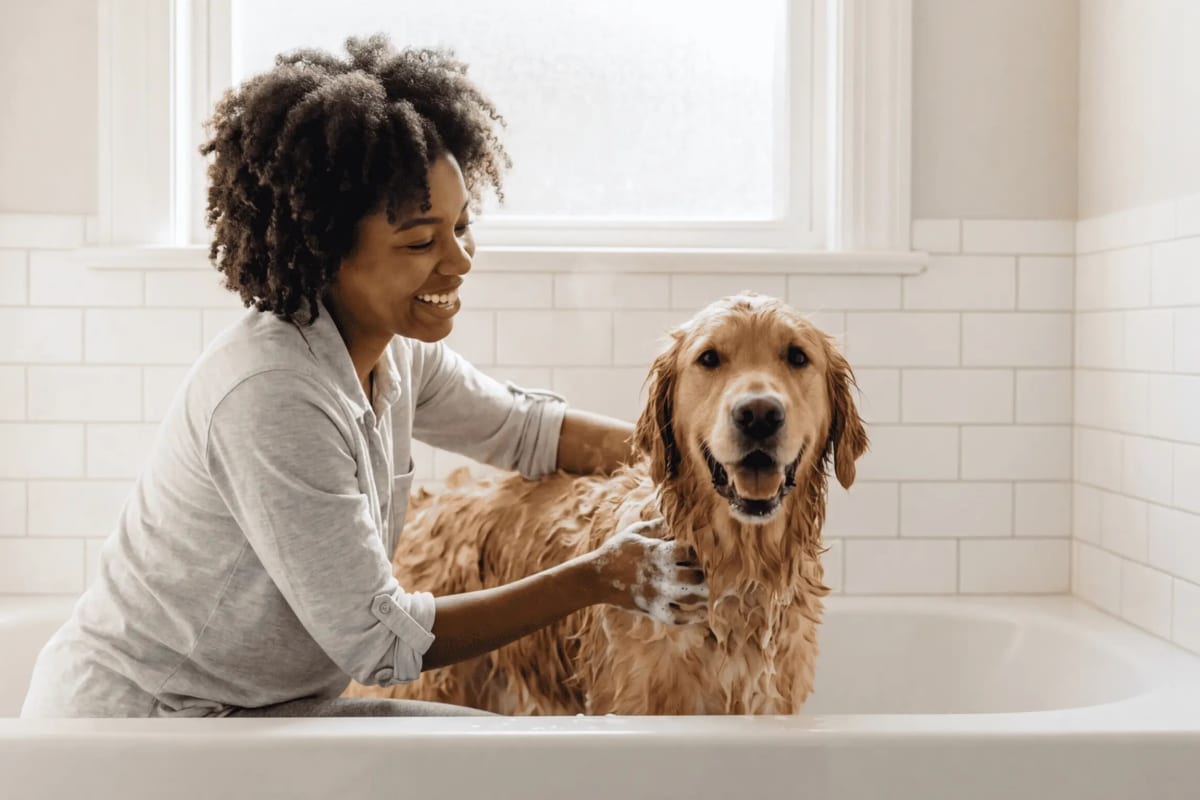
Step-by-Step Dog Bathing Routine
- Brush your dog thoroughly before getting them wet
- Use lukewarm water throughout; avoid anything hot or cold
- Wet the coat completely before applying shampoo
- Lather gently, starting at the neck and working toward the tail
- Avoid getting water directly inside the ears
- Rinse completely until no shampoo residue remains
- Towel dry and follow with a low-heat dryer for long-haired breeds
How to Make Bath Time Less Stressful for Your Dog
Some dogs genuinely fear bath time, and that stress is real.
Starting baths early in puppyhood, using positive reinforcement, and keeping sessions calm and brief can gradually change how your dog feels about grooming. Short, rewarding experiences work far better than pushing through a long, anxious bath.
Dog Bathing Frequency by Breed: Quick Reference Chart
| Breed Type | Examples | Bath Frequency |
|---|---|---|
| Short-haired | Beagle, Boxer, Bulldog | Every 6-8 weeks |
| Long-haired | Shih Tzu, Maltese, Yorkie | Every 3-4 weeks |
| Double-coated | Husky, Golden Retriever, Lab | Every 6-12 weeks |
| Hairless | Chinese Crested | Weekly |
| Oily-coated | Basset Hound | Weekly to biweekly |
| Active outdoor dogs | Any breed | Every 2-4 weeks |
| Dogs with allergies | Any breed | As directed by vet |
FAQ: Dog Bathing Frequency
Getting the bathing schedule right is one of the easiest ways to support your dog's skin health and overall comfort. For most dogs, a bath every four to six weeks is a solid foundation, but coat type, lifestyle, age, and health all shape what the right rhythm looks like for your specific dog.
Staying attuned to your dog's signals matters just as much as any calendar. A greasy coat, persistent odor, or skin changes are your dog's way of telling you that the schedule needs adjusting. The goal is a clean, comfortable dog without disrupting the natural skin oils that keep their coat in great shape.
Tell us your dog's breed, coat type, and lifestyle and we will send you a custom grooming calendar with reminders built in.
Build My Dog's Schedule