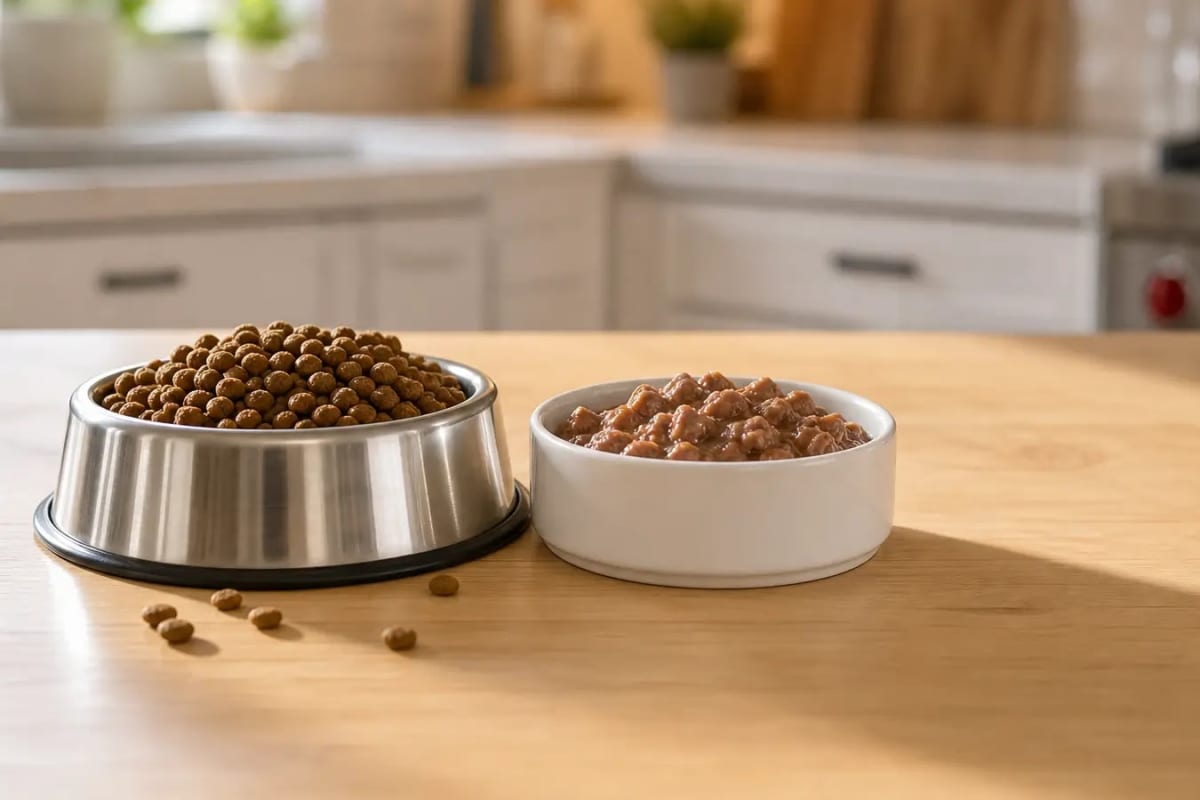
Stand in any pet food aisle and the choice feels impossible. Bags of crunchy kibble on one side, stacks of shiny cans on the other, and your dog waiting at home expecting dinner. The dry vs wet dog food debate is one of the most common questions American pet owners bring to their vet. The good news is that there is no single wrong answer, only a better fit for your dog and your budget.
In this guide you will learn the real differences, the honest pros and cons, what the cost actually looks like per month, and how to decide based on your dog's age, health, and lifestyle.
Quick answer: Neither dry nor wet dog food is automatically better. As long as the food is labeled "complete and balanced" by AAFCO, both can keep a dog healthy. Wet food wins on hydration and taste, dry food wins on cost and convenience, and many dogs do best with a mix of the two.
Dry vs Wet Dog Food at a Glance
Here is the fast comparison before we get into the details.
Factor
Dry Food (Kibble)
Wet Food (Canned)
Moisture
Around 10%
Around 78%
Cost
Lower per serving
Higher per serving
Teeth
Mild plaque scraping
No scraping action
Hydration
Low
High
Shelf life
Long, stays fresh in the bowl
Spoils once opened
Picky eaters
Less tempting
More aromatic and tasty
Best for
Multi-dog homes, grazers, budgets
Seniors, picky eaters, hydration needs
What's Actually the Difference? Moisture and Nutrition
The biggest gap between the two comes down to water. According to PetMD, dry kibble holds roughly 10% moisture while canned food can sit near 78%. That single factor shapes almost everything else, from price to how full your dog feels.
There is also a carbohydrate difference. Dry food usually carries more carbs, often in the 30% to 50% range, because starch helps hold the kibble together. Wet food tends to be lower in carbs and higher in protein and fat.
How to Read the Label the Right Way
Many owners compare protein numbers on the package and assume dry food has more. That is a trap. Dry food looks higher only because it has less water. To compare fairly, you need the dry matter basis, which removes moisture from the math. On that basis, a good wet and a good dry food often land surprisingly close.
Pros and Cons of Dry Dog Food
Kibble is the default choice in most American homes for good reason.
Benefits of Dry Food
Cheaper per serving, which matters a lot in multi-dog households
Stays fresh in the bowl all day, perfect for grazers
Easy to measure and pre-portion for weight control
The crunch offers mild scraping that can reduce some tartar
Drawbacks of Dry Food
Low moisture, so it does little for hydration
Higher in carbohydrates than most canned options
Less tempting for picky, sick, or senior dogs
Pros and Cons of Wet Dog Food
Canned food has real strengths, especially for certain dogs.
Benefits of Wet Food
High water content supports hydration
Strong aroma and taste tempt fussy or older eaters
Soft texture is easy on sore mouths and missing teeth
Usually lower in carbs
Drawbacks of Wet Food
More expensive, especially for big dogs
Spoils quickly once opened and needs refrigeration
Offers no scraping benefit for teeth
Can be messier to serve and store
Does Dry Food Really Clean a Dog's Teeth?
This is the myth worth busting. Many people believe kibble keeps teeth clean. The truth is gentler than that. As VCA Animal Hospitals explains, the crunch gives only a mild scraping effect, and most kibble shatters too fast to do real cleaning below the gumline.
Think of it like a crunchy cracker. It does not replace brushing your own teeth, and kibble does not replace dental care for your dog. If dental health is your goal, the real tools are regular tooth brushing, vet cleanings, and products carrying the Veterinary Oral Health Council (VOHC) seal. Dry food is a small bonus, not a toothbrush.
Which Is Easier to Digest?
It depends on the dog. The soft texture and extra moisture in wet food make it easier for many seniors and small breeds, who often have slower digestion or smaller mouths. Puppies transitioning off mother's milk also tend to accept soft food easily.
That said, wet food is not automatically gentler. High-fat canned formulas can upset sensitive stomachs and lead to looser, bulkier stool. The most reliable move is to watch your own dog and adjust.
Cost Comparison: Dry vs Wet Dog Food per Month
Money is where the two diets split the most. A 13-ounce can of wet food often runs $1 to $3, while a 20 to 30 pound bag of dry food usually costs $30 to $60 and lasts much longer.
Here is a rough monthly picture for the United States.
Dog Size
Dry Food Only
Wet Food Only
Small (under 20 lbs)
$15 to $30
$40 to $60
Medium (20 to 50 lbs)
$30 to $50
$60 to $100
Large (over 50 lbs)
$45 to $75
$90 to $150+
For a 50 pound dog, feeding wet food alone can easily climb to $60 to $90 a month or higher, while kibble keeps the same dog fed for a fraction of that. The bigger the dog, the wider the gap.
Which Should You Choose? A Decision Guide by Dog
Instead of a single winner, match the food to the dog in front of you.
Puppies, Adults, and Seniors
Puppies: softened kibble or wet food is easy to eat during weaning, then a complete puppy formula
Adults: dry, wet, or a mix all work if the label says complete and balanced
Seniors: wet food often wins thanks to soft texture and added moisture
Dogs With Health Conditions
Kidney or urinary issues: wet food helps because extra water supports the urinary tract
Dental disease or missing teeth: wet food is far easier to chew
Weight management: dry food is simple to measure, but portioning matters most either way
Diabetes or special needs: follow your vet's specific diet plan
Can You Mix Wet and Dry Dog Food?
Yes, and many vets see mixing as the best of both worlds. You get the hydration and flavor of wet food with the cost savings and convenience of kibble. The one rule that matters is calories. Combining both does not mean a full serving of each, or your dog will gain weight.
7-Day Transition and Mixing Guide
Days 1 to 2: 75% old food, 25% new food
Days 3 to 4: 50% old, 50% new
Days 5 to 6: 25% old, 75% new
Day 7: full new blend
Always count total daily calories, not two separate meals
Ask your vet to calculate your dog's daily calorie needs so your mix stays on target.
What Do Vets Recommend?
Most veterinarians give the same balanced answer. There is no universal best between wet vs dry dog food. What matters is that the food meets AAFCO standards, fits your dog's age and health, and works for your routine and budget. When a dog has a specific medical need, the vet's recommendation should always lead.
Both can be healthy if they are complete and balanced. Wet food helps with hydration and taste, while dry food is cheaper and better for grazing and easy portioning.
It costs more, spoils quickly once opened, needs refrigeration, and does nothing to scrape plaque off your dog's teeth.
Yes. Mixing gives flavor, moisture, and cost savings together. Just keep the total daily calories correct so your dog does not overeat.
No. Dry food offers mild scraping, but neither replaces brushing. Real dental care means tooth brushing, vet cleanings, and VOHC-approved products.
Usually yes. Feeding a large dog wet food alone can cost two to three times more per month than feeding the same dog kibble.
Conclusion
The dry vs wet dog food question does not have a one-size-fits-all answer. Dry food saves money and supports easy feeding, wet food boosts hydration and tempts picky eaters, and a smart mix often delivers both. Look at your dog's age, health, and your budget, check the label for AAFCO approval, and you are already making a better choice than most.
When you are unsure, your veterinarian knows your dog best and can fine-tune the plan.
Feed Your Dog Smarter
What does your dog eat, dry, wet, or both? Share your experience in the comments, and pass this guide to a fellow dog parent who is stuck staring at that pet food aisle.
Senior dog nutrition without the marketing: the real calorie formula, why protein should rise with age, and what a senior food label actually guarantees.