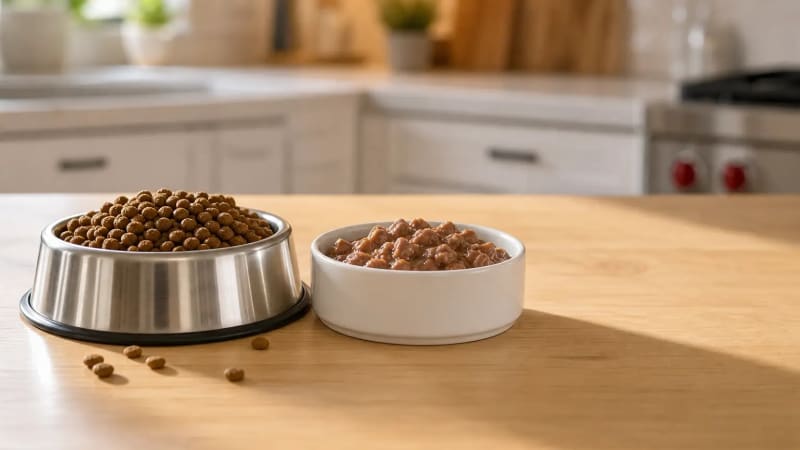
Watching your dog inhale a bowl of fresh, home-cooked food is one of the small joys of having a pet. More owners are ditching the kibble bag and heading to the stove, and it makes sense. You control every ingredient, you skip the mystery fillers, and mealtime feels like love. The catch is that good intentions do not equal good nutrition. These homemade dog food recipes give you a safe starting point, but balance is everything, and there is a right way to do this.
Quick but important: these recipes are a starting point, not a prescription. Every dog is different. Talk with your veterinarian or a board-certified veterinary nutritionist before switching your dog's diet, especially for puppies, seniors, pregnant dogs, or any dog with a health condition.
Is Homemade Dog Food Actually Good for Dogs?
Home cooking can be genuinely good for your dog, and it can also go wrong fast. Both things are true, and the difference usually comes down to whether the meals are balanced.
The upside is real. You know exactly what goes in the bowl, which helps dogs with food sensitivities, picky eaters, and pups who do better on fresh ingredients. Many owners also love being able to tweak meals for a sensitive stomach or a weight problem.
Here is the honest part. A pile of chicken and rice looks healthy, but on its own, it is missing key essential nutrients your dog needs every day. Dogs are not just small humans. Their needs for calcium, certain vitamins, and specific minerals are very particular.
That is why vet oversight is the deciding factor, not a nice-to-have. Good dog nutrition at home works beautifully when a professional helps you get the formula right, and it backfires when you guess.
The Golden Rule: Complete and Balanced
If you remember one thing from this guide, make it this. A homemade meal has to be complete and balanced, which means it delivers every nutrient your dog needs in the right amounts. This is the same standard that commercial foods must meet under the AAFCO nutrient profiles.
The data here is sobering. Researchers at the UC Davis School of Veterinary Medicine reviewed more than 200 homemade recipes and found that about 95% were short on at least one essential nutrient. Over 83% had several gaps at once.
Even more telling: only four of those 200 recipes were written by a board-certified veterinary nutritionist, and those four were the ones that actually held up. Common shortfalls included choline, vitamin D, zinc, and vitamin E, which are not nutrients you can eyeball.
Calcium is the biggest trap. Muscle meat is loaded with phosphorus but almost no calcium, so a meat-heavy bowl throws off the calcium-phosphorus ratio. Over time, that can harm bones, especially in growing puppies. Every recipe below includes a calcium note for exactly this reason.
The takeaway is not "don't cook for your dog." It is "cook for your dog with a real plan," which is what the rest of this guide gives you.
Foods You Must Never Put in Homemade Dog Food
Before the recipes, learn the hard no's. Some everyday kitchen staples are genuinely dangerous for dogs, and a few can be fatal even in small amounts. According to the ASPCA, keep these out of the bowl completely:
Onions, garlic, chives, and leeks. This whole family damages red blood cells, even when cooked or powdered.
Grapes and raisins. Linked to sudden kidney failure, with no known safe amount.
Xylitol. A sweetener in some peanut butters and baked goods that can cause a dangerous blood sugar crash.
Chocolate. Contains theobromine, which dogs cannot process safely.
Macadamia nuts. Cause weakness, tremors, and vomiting.
Alcohol and raw yeast dough. Toxic and can expand painfully in the stomach.
Cooked bones. Splinters easily and can pierce the gut.
Always double-check any human ingredient before it goes in. For a deeper list, our guide to ingredients to avoid covers the sneaky ones hiding in processed foods. When in doubt, leave it out and call your vet or the ASPCA Animal Poison Control hotline.
9 Vet-Approved Homemade Dog Food Recipes
Each recipe below follows the same smart formula: a lean protein, a digestible carb, dog-safe vegetables, a healthy fat, and a calcium or supplement note so the meal moves toward nutritionally complete dog food. Cook proteins fully, skip all salt and seasoning, and cool before serving. Portions depend on your dog's size and calorie needs, covered further down.
A balanced homemade bowl pairs lean protein, a carb, veggies, a healthy fat, and a calcium source.
1. Everyday Chicken and Rice Bowl
Boil or bake skinless chicken breast, then mix with cooked white rice, steamed carrots, and green beans. Stir in a teaspoon of fish oil for omega-3s. Calcium note: add a vet-recommended calcium source or balanced supplement, since chicken and rice alone lack it. Gentle, familiar, and easy on most stomachs.
2. Beef and Pumpkin for Sensitive Stomachs
Brown lean ground beef and drain the fat well. Combine with plain cooked pumpkin puree (not pie filling) and a small scoop of cooked oatmeal. Pumpkin's fiber helps firm up loose stools. Finish with a balanced vitamin-mineral blend so the meal is not just comfort food but real nutrition.
3. Turkey and Sweet Potato
Cook ground turkey thoroughly and mix with mashed sweet potato and chopped spinach. Add a drizzle of olive oil. Sweet potato brings slow-release energy and beta-carotene. Include your calcium source here too. This one is a hit with dogs who find beef too rich.
4. Salmon and Quinoa for Skin and Coat
Bake boneless, fully cooked salmon and flake it over cooked quinoa with steamed peas. Salmon's natural omega-3s support a shinier coat and calmer skin. Check every bite for bones. Rotate this in a couple of times a week rather than daily, and keep the supplement in.
5. Low-Fat Weight-Management Bowl
For a dog carrying extra pounds, use skinless chicken or white fish with lots of green beans, zucchini, and a small portion of rice. High volume, lower calories, so your dog feels full on fewer calories. Pair this with the portion advice below and read our guide on pet obesity before starting a weight plan.
6. Lean Pork and Brown Rice
Cook lean pork loin fully, trim all fat, and combine with brown rice and finely chopped broccoli. Pork is a solid alternative protein for dogs bored of chicken. As always, add the calcium and mineral component so the calcium-phosphorus ratio stays in range.
7. Egg and Veggie Breakfast Scramble
Scramble whole eggs in a dry nonstick pan with no butter or salt, then fold in cooked, mashed carrots and a spoon of cottage cheese. Eggs are one of the most complete proteins around and gentle for older dogs. Serve as a small meal or topper, not a full daily diet on its own.
8. Lamb and Oatmeal (Novel Protein)
Cook ground lamb, drain, and mix with cooked oatmeal and steamed green beans. Lamb is a useful "novel" protein for dogs with chicken or beef allergies. Add fish oil and a balanced supplement. Many sensitive dogs tolerate this combo when common proteins cause trouble.
9. Chicken Liver and Carrot Booster
Lightly cook a small amount of chicken liver and mix with grated carrot and rice. Liver is rich in vitamin A and iron, but a little goes a long way, so keep it to a small share of the meal to avoid vitamin A overload. Think of this as a nutrient booster, not a base meal.
How to Balance and Supplement Homemade Meals
Here is the piece most recipe roundups skip. Whole ingredients rarely add up to a balanced homemade dog food meal on their own, so smart supplementation is what makes the difference.
Three add-ons do most of the heavy lifting:
Calcium. Muscle meat has almost none. Vets often suggest ground eggshell or a calcium supplement dosed to your dog's weight.
Omega-3 fatty acids. Fish oil supports skin, coat, and joints, and offsets the high omega-6 in many meats.
A vitamin-mineral blend. Products like Balance It, created by veterinary nutritionists at UC Davis, are designed to fill the exact gaps home recipes leave.
The gold-standard move is to have a recipe built or checked by a board-certified veterinary nutritionist, which you can find through the American College of Veterinary Nutrition or a service like Tufts Petfoodology. Many will tailor homemade dog food supplements to your specific recipe.
Actionable tip: ask your vet to run bloodwork and check body condition every 6 to 12 months once you switch to home cooking. That catches a slow-building deficiency long before it becomes a health problem.
How Much Homemade Food to Feed Your Dog
Portion size trips up almost everyone, partly because homemade food has a different calorie density than kibble. Feed to calories and body condition, not to a fixed cup you saw online.
As a rough starting point, many adult dogs eat about 2 to 3 percent of their body weight in food per day, split across meals. A 30-pound dog often lands somewhere around 1.5 to 2 cups of cooked food daily, but this shifts with age, activity, and metabolism.
The better gauge is your dog's shape. You should feel the ribs easily without seeing them, and spot a visible waist from above. If your dog is gaining, trim the portion. If ribs are showing, add a little.
Your vet can calculate exact daily calories for your dog and confirm the right portion size. Weigh food on a kitchen scale for the first couple of weeks so you learn what a correct serving actually looks like.
Recipes for Puppies, Seniors, and Special Diets
Life stage changes the math, sometimes a lot. A recipe that suits a healthy adult can be wrong for a growing pup or a senior.
Puppies need more protein, more calories, and a very precise calcium-phosphorus ratio for safe bone growth. Getting this wrong can cause lasting skeletal problems, so puppy meals really should be formulated by a professional. Until then, a trusted commercial option from our best dog food for puppies guide is the safer bet.
Senior dogs often need fewer calories, easy-to-digest proteins, and joint support like added omega-3s. Softer textures help older mouths too.
Special diets for kidney disease, allergies, or pancreatitis are medical diets. These must be designed with your vet, not pulled from a recipe list. If you are weighing feeding styles more broadly, our honest look at the raw diet for dogs walks through that separate debate.
Frequently Asked Questions
A vet-friendly recipe pairs a lean protein, a digestible carb, dog-safe veggies, and a healthy fat, plus a calcium source and balanced supplement. The everyday chicken and rice bowl above is a solid, gentle starting point to run past your vet.
It can be, if it is balanced. Fresh food gives you full ingredient control, but UC Davis research shows most home recipes miss key nutrients. Quality commercial food is already complete, so homemade only wins when done correctly.
Never include onions, garlic, chives, leeks, grapes, raisins, xylitol, chocolate, macadamia nuts, alcohol, raw yeast dough, or cooked bones. All of these are toxic foods for dogs and can cause serious illness.
Almost always yes. Home-cooked meals typically lack enough calcium and certain vitamins and minerals. A calcium source, fish oil, and a vet-formulated vitamin-mineral blend usually fill those gaps.
Yes, as long as each meal is complete and balanced and portioned to your dog's calorie needs. Have your vet review the plan and recheck your dog's health every 6 to 12 months.
Conclusion
Cooking for your dog is a wonderful thing to do, and these homemade dog food recipes prove it does not have to be complicated. The magic is not in any single bowl. It is in balance, safe ingredients, the right supplements, and a vet who helps you tailor meals to your specific dog. Do that, and you get all the benefits of fresh food without the hidden risks. Treat every recipe here as a starting point, loop in your veterinarian, and your pup gets a bowl that is as nourishing as it is loved.
Published by Pettobay
Pettobay Pet Care Editorial Team
Published by Pettobay, a US pet care resource covering dog and cat health, nutrition, and everyday care. The team grounds its guides in veterinary and scientific sources so pet parents can make safe, confident decisions.
Try These Homemade Dog Food Recipes
Which recipe is your dog trying first? Tell us in the comments, and share this guide with a fellow dog parent who is thinking about home cooking.
Senior dog nutrition without the marketing: the real calorie formula, why protein should rise with age, and what a senior food label actually guarantees.