Scroll through dog owner groups for five minutes and you will see it: glossy photos of dogs eating raw meat, captions swearing it changed their pet's life. Then your vet frowns the moment you mention it. So who is right? A raw diet for dogs sits right in the middle of that tug-of-war, with real benefits on one side and real risks on the other.
This guide gives you the honest version, not the marketing version. You will get the genuine pros, the science-backed cons, what major US veterinary bodies actually say, and a safer way forward if you still want to try it.
Quick note: This article is for general education, not medical advice. Always talk to your own veterinarian before changing your dog's diet, especially for puppies, seniors, or dogs with health conditions.
Raw Diet for Dogs at a Glance
Short on time? Here is the honest summary in one view.
Question
The straight answer
Can it have benefits?
Yes, mostly coat, stool, and enthusiasm at mealtime
Are the risks serious?
Yes, mainly bacteria and unbalanced nutrition
Do most US vets recommend it?
No, major bodies advise against raw
Is it risky for your family too?
Yes, handlers can get sick, not just the dog
Can it be done more safely?
Somewhat, with strict handling and vet guidance
Bottom line up front: a raw diet can produce visible perks, but mainstream veterinary medicine considers the safety trade-offs too high for most households.
What Is a Raw Dog Food Diet?
A raw diet means feeding uncooked animal ingredients instead of, or alongside, cooked commercial food. Most plans center on raw muscle meat, organ meat, raw edible bone, and sometimes eggs, vegetables, or supplements.
You will hear it called the BARF diet, short for "biologically appropriate raw food." It comes in two very different forms, and the difference matters a lot:
Commercial raw, sold frozen or freeze-dried, formulated to meet nutrient standards.
Homemade raw, mixed by the owner at home, where balance is much harder to get right.
That second type is where many problems start. If you want a refresher on reading any dog food, our guide to dog food ingredients to avoid pairs well with this one.
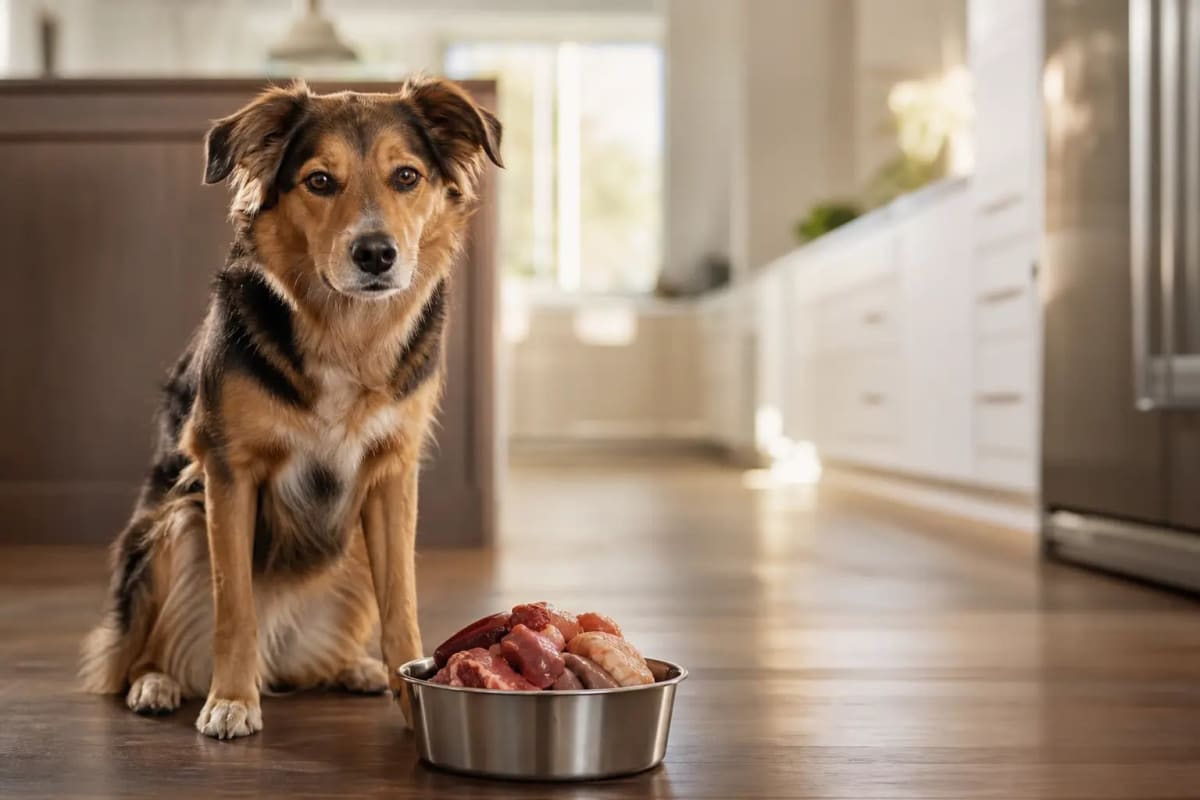
A typical raw bowl: muscle meat, organ, and raw edible bone.
Pros of a Raw Diet for Dogs
Raw feeding would not be so popular if owners saw nothing good. The reported upsides are real for many dogs, even if the long-term science is still thin.
Shinier coat and healthier skin. Natural fats in raw meat often leave the coat glossy and can ease dry, itchy skin.
Smaller, firmer stools. Highly digestible protein means less waste, so many owners notice tidier yard cleanup.
Mealtime enthusiasm. Picky eaters frequently dive into raw food with energy they never showed for kibble.
Cleaner teeth from chewing. Gnawing on raw meaty bones can scrape away some tartar, which is why a few holistic vets stay open to it.
Here is the honest caveat. Cornell University's Riney Canine Health Center points out that strong claims like curing allergies, preventing cancer, or fixing behavior have no solid evidence behind them. The visible perks are believable. The miracle cures are not.
Cons and Risks of a Raw Diet
This is where the enthusiasm needs a reality check. The downsides are not rare side effects, they are the main reason vets hesitate.
Bacterial Contamination (Salmonella, Listeria, E. coli)
Raw meat can carry Salmonella, Listeria, and E. coli. This is the single biggest concern, and the numbers are not small.
In one FDA review of about 196 commercial raw pet food samples, 15 tested positive for Salmonella and 32 for Listeria. The FDA has also estimated that frozen raw pet food bought online carries roughly a 1-in-3 chance of containing a harmful foodborne pathogen.
Worse, a dog can look perfectly fine and still shed dangerous bacteria in its stool. Research summarized by Tufts University suggests up to about 30% of raw-fed dogs may pass these germs into your home environment.
Nutritional Imbalance
A bowl of raw meat is not a complete diet. Without careful formulation, homemade raw meals often miss key nutrients like calcium, certain vitamins, and the right mineral ratios.
Veterinary nutritionists have repeatedly found that DIY raw recipes fail basic nutrient requirements. Over months, that gap can quietly harm bones, organs, and growth, which is especially risky for puppies. If you feed a young dog, our best dog food for puppies guide explains why balanced growth nutrition matters so much.
Bones and Choking or Obstruction
Raw bones feel natural, but they cause real emergencies. A swallowed bone fragment can crack teeth, lodge in the throat, or block the intestines.
In serious cases, a bone can puncture the gut wall, leading to surgery or life-threatening infection. These are exactly the situations covered in our roundup of common dog diseases and emergencies that send dogs to the vet.
Do Vets Recommend Raw Feeding?
For most owners, the answer from official channels is a clear no. The American Veterinary Medical Association discourages feeding any raw or undercooked animal protein to dogs and cats, citing risks to both pets and people.
The FDA and the CDC take the same line. Their shared position is that the documented risks outweigh the benefits that have actually been proven.
That said, the profession is not perfectly united. A minority of veterinarians support carefully managed raw feeding, usually with commercial balanced products and strict hygiene. The mainstream view stays cautious, but it is not pure hysteria; it is built on contamination data.
Is Raw Dog Food Safe for Your Family?
Here is the angle most raw-feeding fans skip: the risk does not stop at your dog's bowl. You handle the meat, wash the dish, and get licked by a dog whose mouth just touched raw protein.
People most at risk include young children, pregnant women, older adults, and anyone with a weakened immune system. The CDC specifically warns that handling raw pet food or surfaces it touches can pass Salmonella and Listeria to humans.
A real example makes this click. Public health investigators have traced human Salmonella cases back to raw pet food in the home, not to anything the person ate themselves. The dog was the link. That household risk is a deciding factor for many families with babies or grandparents around.
Which Dogs Should Not Eat Raw
Even supporters agree that raw is a poor fit for some dogs and some homes. Skip raw feeding, or only proceed with direct vet supervision, if any of these apply:
Puppies, whose growing bodies need precise, balanced nutrition.
Senior dogs or dogs with kidney, liver, or immune problems.
Homes with infants, pregnant women, the elderly, or immunocompromised people.
Dogs with a history of pancreatitis or digestive sensitivity.
If your dog already shows odd symptoms, sort that out first. Our guide to the early signs your dog is sick helps you spot trouble before a diet change makes it harder to read.
How to Feed Raw More Safely
Decided to try it anyway? Then treat it like handling raw chicken for your own family, because the stakes are similar. This checklist is the safer-feeding version vets wish more owners followed.
Choose commercial, balanced raw over homemade guesswork, and look for an AAFCO nutritional adequacy statement.
Ask your vet first, ideally with input from a board-certified veterinary nutritionist.
Store frozen, thaw in the fridge, never on the counter.
Disinfect everything, bowls, counters, utensils, and your hands, right after each meal.
Keep raw food away from kids' areas and never let a raw-fed dog lick faces.
Pick up stool promptly to limit bacteria spreading in the yard.
Watch your dog closely for vomiting, diarrhea, or low energy, and call the vet early.
Following every step lowers the risk. It does not erase it, and that honesty is the whole point.
Raw vs Kibble: Quick Verdict
So how does raw stack up against the bag most owners already buy? Quality commercial kibble is balanced, safe, convenient, and cheap, with decades of feeding behind it. Raw can deliver a glossier coat and happier mealtimes, but it adds bacterial and nutritional risk that kibble simply does not carry.
For a deeper food-type comparison, our breakdown of dry vs wet dog food covers the other big choice on the shelf. For most US households, a high-quality cooked or commercial diet remains the lower-risk, lower-stress pick.
Frequently Asked Questions
It can improve coat and stool quality for some dogs, but it carries real risks from bacteria and nutritional gaps. The proven benefits are modest, and major US vet groups advise against it for most pets.
The big three are bacterial contamination like Salmonella, unbalanced nutrition in homemade meals, and injuries or blockages from bones. There is also a real risk of passing germs to people in the home.
Most do not. The AVMA, FDA, and CDC discourage raw feeding because of contamination risk. A minority of vets support carefully managed commercial raw diets with strict hygiene.
Yes. You can pick up Salmonella or Listeria from handling the food, touching contaminated surfaces, or contact with a raw-fed dog's saliva. Children, seniors, and immunocompromised people face the highest risk.
Not clearly. Raw may boost coat shine and appetite, but balanced commercial kibble is safer, cheaper, and nutritionally complete. For most owners, the lower-risk option wins.
Final Thoughts
A raw diet for dogs is not a scam, and it is not a miracle either. The glossy coats and clean bowls are real, but so are the Salmonella numbers, the nutritional gaps, and the danger to vulnerable family members. That is the full picture most one-sided articles leave out.
If you are tempted, the smartest move is simple: talk to your vet, lean on balanced commercial products if you proceed, and handle every meal like the raw meat it is. An informed choice beats a trendy one every time.
Published by Pet to Bay
Pet to Bay Editorial Team
Published by Pet to Bay, a US pet care resource covering dog and cat nutrition, health, and behavior. Pet to Bay translates veterinary guidance and official research into clear, practical advice for everyday pet owners.
Make a Smart Raw Diet Choice for Your Dog
Have you tried raw feeding or decided against it? Share your experience in the comments, and pass this guide to a fellow dog owner weighing the same decision.
Senior dog nutrition without the marketing: the real calorie formula, why protein should rise with age, and what a senior food label actually guarantees.