Dog Vaccination Schedule: A Complete Guide for Puppies, Adults, and Senior Dogs
Puppy Vaccination Guide
When you bring a puppy home, the vet visits start coming fast. First visit, second visit, third visit, boosters, then more boosters. It can feel like a revolving door, and somewhere along the way you start wondering if all of these shots are really necessary, or if some are just nice to have.
Here is the honest answer: most of them genuinely matter. Diseases like parvovirus and distemper were killing dogs in huge numbers not that long ago. Vaccines changed that almost entirely. Vaccinations are a vital part of preventative healthcare, especially for puppies, and these diseases are now almost entirely preventable when dogs receive vaccinations on an appropriate schedule.
This complete guide walks you through exactly which vaccines your dog needs at every stage of life, when to get them, what they cost, and what to expect afterward. No fluff, just the information you actually need.
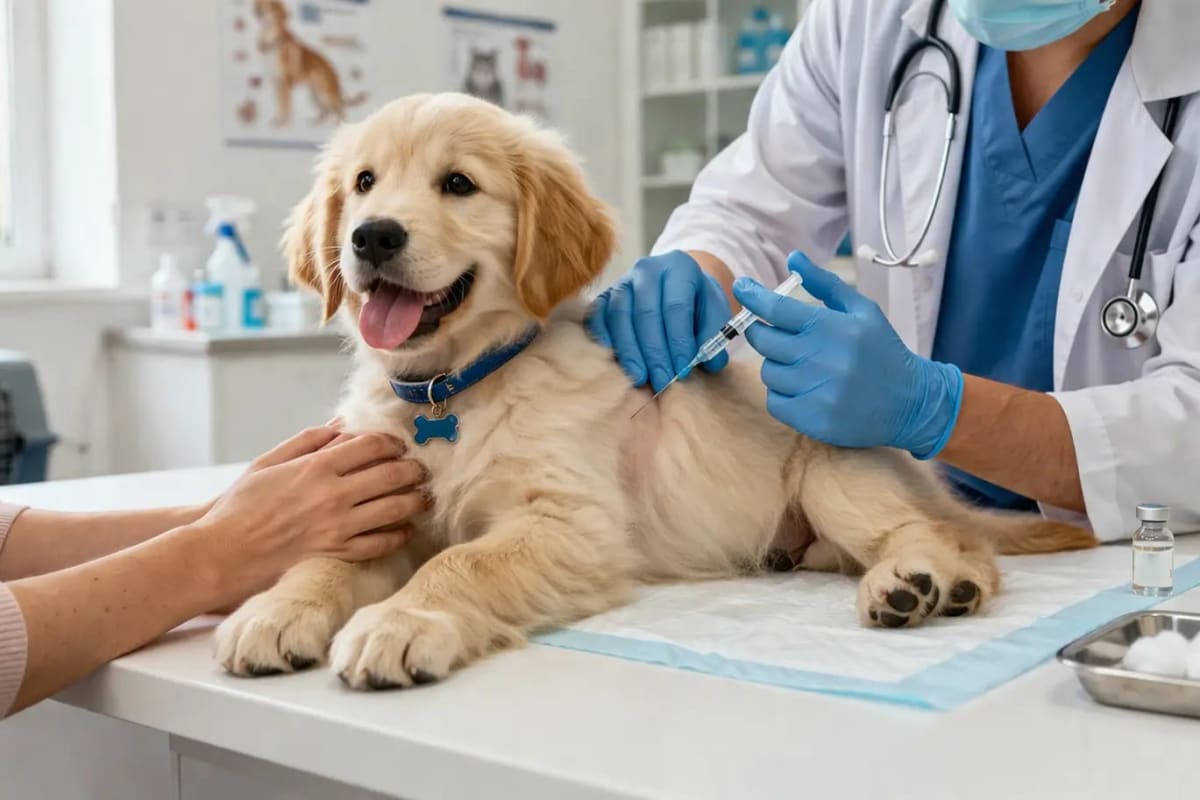
Vaccinations are a core part of preventative care and help protect puppies from diseases that can be severe or fatal.
Core vaccines vs non-core vaccines: what is the difference?
Core vaccines are recommended for all dogs and cats unless there is a medical need not to vaccinate. Non-core vaccines are recommended for certain pets based on their risk of exposure to the disease, such as through their lifestyle or geographic location. Think of it this way: core vaccines are non-negotiable. Non-core vaccines depend on where you live, what your dog does, and how much exposure risk they actually have.
DHPP (Distemper, Hepatitis, Parvovirus, Parainfluenza) CoreThe DHPP vaccine protects dogs from four serious viral diseases: distemper, adenovirus (hepatitis), parvovirus, and parainfluenza. This is a core vaccine typically given to puppies in a three or four-part series and then boosted every one to three years in adult dogs to maintain immunity. Distemper attacks the nervous system, parvovirus the gut, and both can be fatal without vaccination.
Rabies Core + Legally RequiredDue to the fatality and zoonosis associated with rabies, there are legal ramifications if your pet is not current on their rabies vaccine. This is the one vaccine you simply cannot skip. If an unvaccinated dog bites someone or is exposed to a rabid animal, the legal and health consequences are serious. Most regions require it by law.
Leptospirosis Now CoreFormerly considered a lifestyle vaccine, the leptospirosis vaccine is now a core dog vaccine. Leptospirosis is a bacterial disease that can cause severe kidney or liver failure in dogs and people, and has now been found to occur in suburban and urban settings too. If your dog drinks from puddles, plays near rivers, or spends time outdoors, this one matters.
Bordetella (Kennel Cough) Non-Core / LifestyleBordetella and canine influenza vaccines are recommended for dogs that visit places where other dogs gather, like boarding, daycare, and training facilities. If your dog never goes to kennels or dog parks, this may not be necessary. If they do, it is almost always required and strongly recommended.
Lyme Disease Non-Core / GeographicGeography is a major consideration with this vaccine, as Lyme disease is most common in the Northeast, upper Midwest, Mid-Atlantic, and along the Pacific coast. Tick prevention is always the first line of defense, but dogs in high-risk areas should get this vaccine too. Ask your vet if your region qualifies.
Canine Influenza (Dog Flu) Non-Core / LifestyleCanine influenza vaccines are typically recommended for dogs that go to day care, boarding facilities, the groomer, or any place where they will be among other dogs. It is not necessary for dogs with minimal social contact, but a smart add-on for social pups.
Complete puppy vaccination schedule (6 weeks to 1 year)
Core vaccines (DHPP, leptospirosis, and rabies) are essential for all puppies, with timing designed to build immunity safely. A typical puppy vaccination schedule involves a series of vaccinations given in two to four-week intervals. Here is what that looks like in practice:
Age Vaccines Notes 6 to 8 weeks DHPP (first dose) Core First vet visit. Usually done by breeder or shelter before you take puppy home. 10 to 12 weeks DHPP (second dose) CoreLeptospirosis (first dose) Core
Bordetella Optional Boosters must be given within 4 weeks of previous dose, otherwise the series may need to restart. 14 to 16 weeks DHPP (third dose) Core
Rabies (first dose) Core
Leptospirosis (second dose) Core
Canine Influenza Optional Rabies is legally required in most regions. After this round, your puppy is considered fully protected for core diseases. 16 to 18 weeks DHPP (fourth dose if needed) Core Some vets add a fourth DHPP round for large breeds or high-risk environments. Ask your vet. 12 to 16 months DHPP booster Core
Rabies booster Core
Leptospirosis booster Core First adult boosters. After this, DHPP and rabies may shift to every 1 to 3 years depending on vaccine type and local laws. IMPORTANT
While your puppy will have some immunity after their second vaccination, they are still not fully protected until they have completed their full vaccination series. Avoid high-traffic dog areas such as parks or sidewalks with heavy pet activity to reduce the risk of exposure to diseases like parvovirus. Quiet walks in your own backyard or clean, dry pavement are fine in the meantime.
Adult dog vaccination schedule (1 to 7 years)
Once your dog finishes their puppy series, the frequency drops significantly. This is the part
most adult dog owners get confused about, because different vaccines have different booster
timelines. Here is the simplified breakdown:
Vaccine Booster Frequency Notes DHPP Every 1 to 3 years Your vet determines timing based on titer testing or vaccine type used. Rabies Every 1 to 3 years Legally required. First booster is at 1 year, then every 1 to 3 years after. Check local laws. Leptospirosis Annually Annual booster needed because immunity wanes faster than for viral vaccines. Bordetella Annually Some boarding and grooming facilities still request every 6 months. Check their requirements. Canine Influenza Annually Only needed for social dogs. Two doses given 2 to 4 weeks apart initially, then annual booster. Lyme Disease Annually Only for dogs in tick-endemic areas. Two initial doses, then yearly boosters. Pro TipA titer test is a procedure for testing and measuring the amount of antibodies a dog has in its blood for a specific disease. They can be a way to measure if your dog needs to be revaccinated or if they can forgo the booster. Some owners prefer titer testing over automatic boosters, especially for older dogs. Talk to your vet about whether this makes sense for your dog.
Senior Dog Vaccination Schedule (7 years and older)
Senior Dog Vaccination Schedule
(7 years and older)
A common misconception is that senior dogs do not need vaccines anymore. This is not true. Yes, age alone is not a reason to skip vaccines. Adult and senior dogs still need vaccines, and your vet will tailor a schedule depending on age and health condition.
That said, the approach does shift a little. For senior dogs, your vet will weigh the vaccine's benefit against the dog's current health status. A dog with compromised kidney function or a chronic illness might have a modified schedule. This is a conversation to have at your dog's annual wellness exam, not a reason to skip vaccines entirely.
Key Takeaway
Senior dogs still require vaccinations. The difference is not whether to vaccinate, but how the schedule is adjusted based on health and risk factors.
(7 years and older)
A common misconception is that senior dogs do not need vaccines anymore. This is not true. Yes, age alone is not a reason to skip vaccines. Adult and senior dogs still need vaccines, and your vet will tailor a schedule depending on age and health condition.
That said, the approach does shift a little. For senior dogs, your vet will weigh the vaccine's benefit against the dog's current health status. A dog with compromised kidney function or a chronic illness might have a modified schedule. This is a conversation to have at your dog's annual wellness exam, not a reason to skip vaccines entirely.
Key TakeawaySenior dogs still require vaccinations. The difference is not whether to vaccinate, but how the schedule is adjusted based on health and risk factors.
What to expect after your dog gets vaccinated
Most dogs sail through their shots without any issues. But mild reactions are normal and nothing
to panic about. Side effects typically are minor, and they are far outweighed by the benefits of
protecting your pet, your family, and your community from potentially fatal diseases. Here is
what is normal versus what needs immediate attention:
Normal (resolve in 24 to 48 hrs) Call your vet if you see this Low energy or sleepiness Facial swelling or hives Mild fever Difficulty breathing Soreness at injection site Vomiting or diarrhea within hours Reduced appetite for a day Collapse or sudden weakness Small, temporary lump at injection site Lump persisting beyond 3 weeksHow much do dog vaccines cost?
Cost varies depending on where you live, your vet clinic, and whether you use a low-cost clinic
or mobile vaccine event. Here is a general ballpark:
DHPP combo $20 to $50 Per dose, puppy series needs 3 to 4 rounds Rabies $15 to $30 Often cheaper at low-cost clinics Bordetella $20 to $45 Nasal or injectable options available Leptospirosis $15 to $35 Two initial doses required First year total $100 to $350 Puppy year is most expensive Annual adult cost $50 to $150 Much lower after first year Money Saving TipNonprofits like Petco Love Care and Paw Fund host vaccine events, and veterinary schools and mobile clinics offer discounted packages. If cost is a concern, search for low-cost vaccine clinics in your area. Many municipal governments also sponsor free or discounted rabies vaccine events annually.
Quick checklist to stay on top of your dog's vaccines
✓ Start DHPP at 6 to 8 weeks, complete all doses by 16 weeks ✓ Get the rabies vaccine at 14 to 16 weeks (legally required in most regions) ✓ Schedule boosters within 4 weeks of each dose, or the series may need to restart ✓ Ask your vet about Bordetella if your dog visits boarding, grooming, or dog parks ✓ Keep a physical or digital vaccination record for boarding and travel requirements ✓ Book an annual wellness exam to review and update your dog's vaccine status ✓ Ask about titer testing if you want to avoid over-vaccinating your older dogFrequently asked questions
When should my puppy get their first vaccine?
Just like human babies, puppies are born with temporary immunity from their mother's milk. But this protection fades within weeks. That is why vaccines start early, usually at 6 to 8 weeks of age, and are given in a series to build strong immunity. Most puppies receive their first DHPP dose from the breeder or shelter before coming home.
How many rounds of shots does a puppy need?
Puppies typically require three or four rounds of core vaccinations before they are considered fully protected. These rounds are spaced 2 to 4 weeks apart starting at 6 to 8 weeks and finishing around 16 weeks of age. Missing the window between doses may mean starting the series over, so keeping appointments on schedule matters.
Is it safe to take my puppy outside before all vaccines are done?
As long as you choose safe spaces away from stray, sick, or unvaccinated dogs, it is great for puppies to go outside right away for short walks, socialization, and potty training. Just avoid dog parks, pet stores, and high-traffic areas where unvaccinated dogs have been until your puppy's series is complete.
What happens if my dog misses a booster?
Skipping or delaying recommended vaccinations may lead to incomplete protection, leaving your pet susceptible to infection. If your adult pet is overdue or missing some vaccinations, it is not too late. Ask your veterinarian about a recommended vaccination program based on your pet's age and needs. In most cases, your vet can simply restart or catch up without starting the entire series from scratch.
Do senior dogs still need vaccines?
Yes. Age alone is not a reason to skip vaccines. Adult and senior dogs still need vaccines, and your vet will tailor a schedule depending on age and health condition. For older dogs with health issues, your vet might adjust the timing or skip certain non-core vaccines, but core vaccines and rabies remain important throughout your dog's life.