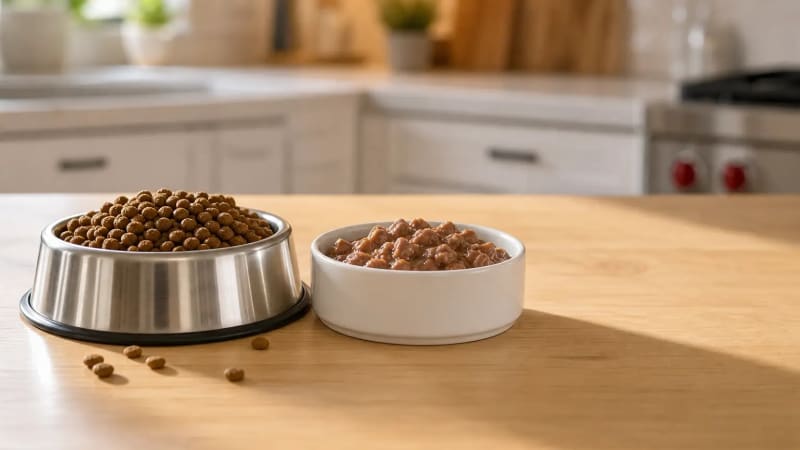

Do Dogs Need Supplements? 7 Vet-Backed Answers (2026)
Key Takeaways
- Most dogs do not need supplements. If your dog eats a commercial food labeled "complete and balanced" for their life stage, that food is already built to deliver every required nutrient.
- Omega-3 fish oil is the one supplement with results you could reasonably expect to notice in an arthritic dog.
- The 2022 meta-analysis reported a very marked non-effect for chondroitin-glucosamine products and concluded they should no longer be recommended for pain management in dogs or cats with osteoarthritis.
- No federal agency reviewed that joint chew for safety or effectiveness before it hit the shelf.
- Buy for a diagnosis, not for a feeling. Your dog's food is doing more than the shelf gives it credit for.
- Do Dogs Need Supplements? The Short Answer
- What "Complete and Balanced" Actually Guarantees
- The 5 Dogs That Genuinely Do Need Supplements
- What the Research Actually Says: 7 Supplement Evidence Grades
- Omega-3 Fish Oil: The Strongest Evidence
- Glucosamine and Chondroitin: Why the Science Turned
- Probiotics: Promising but Unproven
- CBD, Collagen, and Curcumin: Where the Evidence Sits
- Multivitamins for Healthy Dogs: Usually Redundant
- Are Dog Supplements FDA Approved?
- Why DSHEA Does Not Apply to Your Dog
- The NASC Quality Seal: The One Label Signal Worth Checking
- When Supplements Do More Harm Than Good
- Vitamin D: A Documented US Recall
- Calcium and Growing Large-Breed Puppies
- Why You Should Never Give Human Vitamins
- How to Decide for Your Dog: A 5-Question Checklist
- What to Ask Your Vet Before Buying Anything
- Frequently Asked Questions
- The Bottom Line on Dog Supplements
Most dogs do not need supplements. If your dog eats a commercial food labeled "complete and balanced" for their life stage, that food is already built to deliver every required nutrient. Supplements earn their place in specific cases: a homemade diet, a raw diet, a diagnosed health condition, or a direct recommendation from your veterinarian.
Walk down the pet aisle at any Petco, and you will pass joint chews, salmon oil pumps, probiotic powders, and multivitamins molded to look like bacon. Americans spent $158 billion on their pets in 2025, according to the American Pet Products Association, and a growing share of that goes toward products no federal agency reviewed before they reached the shelf. So do dogs need supplements, or is most of that aisle marketing? This guide grades seven common options against published veterinary research and tells you which ones are worth your money.
Do Dogs Need Supplements? The Short Answer
For a healthy adult dog eating a complete and balanced commercial diet, the honest answer is no. Not "probably not." No.
That lands badly with owners, because supplement packaging implies a gap that needs filling. Usually the gap is not there.
What "Complete and Balanced" Actually Guarantees
That phrase on a bag is not a marketing slogan. It is a regulated claim with two possible routes behind it.
The FDA explains that a dog food may carry the claim only if it meets one of the nutrient profiles set by the Association of American Feed Control Officials (AAFCO), or passes a feeding trial run to AAFCO procedures. AAFCO publishes two dog profiles: one for growth and reproduction, covering puppies plus pregnant and nursing dogs, and one for adult maintenance.
Here is the detail that matters for supplements. Every nutrient in a profile carries a minimum level, and some also carry a maximum level. The ceilings exist on purpose, to rule out unnecessary excesses. A food built to that standard is not just avoiding shortfalls. It is avoiding overloads too.
The FDA also spells out something supplement labels tend to skip: treats, snacks, and supplements are not meant to be a pet's sole diet, so they are usually not complete and balanced themselves. A joint chew is not nutrition. It sits on top of nutrition.

The nutritional adequacy statement sits in small print near the feeding chart, not on the front of the bag.
Find the nutritional adequacy statement in the small print near the feeding chart, not on the front of the bag. If it names an AAFCO profile or an AAFCO feeding trial, your dog's baseline is covered. Our guide to dog food ingredients to avoid breaks down the rest of the label.
The 5 Dogs That Genuinely Do Need Supplements
Blanket advice fails because these situations are real:
- 1. Dogs on homemade diets. Home-cooked meals rarely hit AAFCO minimums without deliberate supplementation, and calcium is the usual casualty. If you cook for your dog, our homemade dog food recipes guide covers how balancing actually works.
- 2. Dogs on raw diets. Same structural problem, different format. Balancing a raw diet for dogs takes planning, not guesswork.
- 3. Dogs with a diagnosed condition. Osteoarthritis, chronic kidney disease, inflammatory bowel disease, and stubborn skin allergies are the common cases where a vet adds something targeted.
- 4. Dogs whose bloodwork shows a real shortfall. A veterinarian can confirm a gap. A hunch at the checkout cannot.
- 5. Dogs eating a food labeled "for intermittent or supplemental feeding only." Plenty of toppers and some boutique lines carry this statement instead of a complete and balanced claim. Those foods were never designed to stand alone.
Notice what is missing from that list: "my dog seems a bit slow lately" and "the packaging said it supports joint health."
What the Research Actually Says: 7 Supplement Evidence Grades
This is the part the pet store does not print.
In 2022, a research team at the Université de Montréal published a systematic review and meta-analysis in the International Journal of Molecular Sciences covering 57 articles and 72 separate trials across nine categories of natural health compounds in dogs and cats with osteoarthritis. It remains one of the largest evidence syntheses in the field, and its findings do not flatter the supplement aisle.
| # | Supplement | Evidence grade | What the research actually found |
|---|---|---|---|
| 1 | Omega-3 fish oil | Strong | Clear pain relief in arthritic dogs across multiple trials |
| 2 | Cannabidiol (CBD) | Moderate | Real analgesic effect, smaller than omega-3 |
| 3 | Collagen | Weak | Faint signal, too thin to recommend on its own |
| 4 | Curcumin | Inconclusive | Results split between negative, ambiguous, and positive |
| 5 | Glucosamine + chondroitin | Evidence against | Meta-analysis found a marked non-effect for pain |
| 6 | Probiotics (acute diarrhea) | Unproven | Beat placebo by about 1.3 days, not statistically significant |
| 7 | Multivitamin (healthy dog, complete diet) | Not needed | Nutrients already supplied at AAFCO-tested levels |
Omega-3 Fish Oil: The Strongest Evidence
The Montreal review found evidence of clinical analgesic efficacy for omega-3 supplements and omega-3 enriched diets. It is the clearest win in the whole category.
A single trial shows why. Roush and colleagues at Kansas State University ran a randomized, double-blinded, controlled study published in the Journal of the American Veterinary Medical Association in 2010, using 38 client-owned dogs with osteoarthritis. Dogs fed a food containing 3.5% fish oil omega-3s improved their peak vertical force by 5.6% over 90 days. Peak vertical force is a force-plate measurement of how much weight a dog is willing to put on a sore leg, so it is a physical reading, not an owner's impression. The control group moved 0.4%. Improvement showed up in 82% of the fish oil dogs versus 38% of controls.
Practical read: fish oil is the one supplement where you could reasonably expect a visible difference in a stiff, arthritic dog. Dose is easy to overshoot, and high doses can loosen stools, so get the number from your vet rather than the bottle.

Force-plate testing measures how much weight an arthritic dog is willing to put on a sore leg.
Glucosamine and Chondroitin: Why the Science Turned
Here sits the widest gap between what the aisle sells and what the research supports.
The 2022 meta-analysis reported a very marked non-effect for chondroitin-glucosamine products and concluded they should no longer be recommended for pain management in dogs or cats with osteoarthritis. Reviews before it had been inconsistent, some finding weak support and others calling the picture unclear. Pooling 72 trials sharpened the answer, and the answer was not the one the market expected.
Worth knowing for context: the authors disclosed prior industry-funded work in canine osteoarthritis, including with several pet food and animal health companies. That disclosure makes the finding harder to dismiss, not easier. A conclusion that undercuts a large commercial category is not a convenient one for anybody involved.
If your dog is already on a joint chew and doing well, this is a conversation for your next appointment, not a reason to panic. But if you are standing in the aisle deciding what to buy for a stiff senior, the evidence points at fish oil, not glucosamine.
You can read the full systematic review on PubMed Central at no cost.
Probiotics: Promising but Unproven
Researchers at the University of Florida published a randomized, double-blinded, placebo-controlled trial in Frontiers in Veterinary Science in 2019. Sixty dogs with acute diarrhea and no other health problems were split into three groups.
Time to acceptable stool consistency came in at 3.5 days with the probiotic, 4.6 days with oral metronidazole, and 4.8 days with placebo. The differences were not statistically significant (p = 0.17).
Two things fall out of that. The probiotic did not clearly beat doing nothing. Neither did metronidazole, a commonly prescribed antibiotic. Most simple acute diarrhea in an otherwise healthy dog settles on its own, which is the honest framing for the whole category.
Probiotics may still help specific dogs with chronic gut disease. The evidence for a healthy dog's daily scoop is not there yet.
CBD, Collagen, and Curcumin: Where the Evidence Sits
Cannabidiol showed genuine analgesic efficacy in the Montreal analysis, though to a lesser degree than omega-3 products. The researchers called the results promising. Legal status and product quality vary widely by state, so this one belongs in a vet conversation rather than an online cart.
Collagen managed only weak efficacy, and the authors said it was not possible to rule on an indication for it at present. Curcumin came back genuinely mixed, with individual studies landing negative, ambiguous, and positive. Neither has earned a routine recommendation.
Multivitamins for Healthy Dogs: Usually Redundant
If your dog's food already meets an AAFCO profile, a daily multivitamin adds nutrients that were measured into the food on purpose, at levels chosen to stay under the profile's ceilings.
Vitamins A, D, E, and K are fat-soluble, meaning the body stores them rather than flushing the surplus. Stacking a supplement on top of a complete diet is how a nutrient quietly climbs past the maximum the profile was designed to hold.
Are Dog Supplements FDA Approved?
No. The reason is more interesting than most owners expect.
Why DSHEA Does Not Apply to Your Dog
Congress passed the Dietary Supplement Health and Education Act in 1994, creating the regulatory category that human supplements live in today. Two years later, the FDA determined that DSHEA did not apply to products intended for animals, and the agency notes at least one court case has upheld that reading.
So products marketed as dietary supplements for animals do not fall under DSHEA, and the FDA does not recognize them as a special category at all. Legally, they are either animal food or unapproved new animal drugs, depending on what the label claims.
The practical effect is simple. No federal agency reviewed that joint chew for safety or effectiveness before it hit the shelf.
The NASC Quality Seal: The One Label Signal Worth Checking
Since federal pre-approval does not exist, the useful signal is voluntary third-party auditing.
The National Animal Supplement Council is an industry group that runs an audit program for suppliers of dog, cat, and horse supplements. Companies that pass its comprehensive third-party audit and maintain ongoing compliance may display the NASC Quality Seal. NASC also operates an adverse event reporting system, which gives the category something closer to real safety surveillance.
Only a minority of the many companies selling animal supplements in the United States are audited members, and that is precisely what makes the seal useful. It narrows a crowded shelf down to a shortlist fast. Check the seal on the label before you check the price.
When Supplements Do More Harm Than Good
Vitamin D: A Documented US Recall
Between January and May 2019, Hill's Pet Nutrition expanded a recall that eventually covered 86 total lots of canned dog food. FDA testing found excessive, potentially toxic amounts of vitamin D. The agency's own wording is blunt: vitamin D is an essential nutrient for dogs, but very high amounts can cause serious health problems including kidney failure or death.
What makes this case worth remembering is the brand. Hill's is mainstream and widely recommended by veterinarians. The cause was a formulation and manufacturing failure, not a fringe operator cutting corners. Nutrient overload is a real mechanism, not a theoretical warning.
The FDA also flags a second route into the same problem. Dogs get vitamin D toxicity by eating the supplements a person in the household is taking, and those cases move fast, with signs showing up in hours or days rather than building gradually. A bottle left on a nightstand is a genuine hazard.
If your dog gets into anything, knowing the early signs your dog is sick buys you time.

Household supplement bottles are a common route into vitamin D toxicity for dogs.
Calcium and Growing Large-Breed Puppies
Foods formulated for growth are built around AAFCO's growth and reproduction profile, and that profile sets ceilings as well as floors for exactly this reason.
Adding a calcium supplement to a food already formulated for a growing puppy pushes toward the upper limit the profile was designed to respect. Big, fast-growing breeds are the group where owners most often feel tempted to help the bones along. Talk to your vet before adding anything during growth, because a puppy already eating a complete and balanced growth food is not short of calcium.
Why You Should Never Give Human Vitamins
The ASPCA lists the ingredients of main concern when pets get into human multivitamins and supplements: iron, manganese, alpha lipoic acid, methionine, and vitamin D3.
Xylitol deserves its own mention. It turns up in chewable and fast-melt formulations aimed at people, and dogs process it very differently, with a rapid drop in blood sugar as the result.
Keep the ASPCA Animal Poison Control Center number where you can find it fast: (888) 426-4435.
How to Decide for Your Dog: A 5-Question Checklist
Run these in order before anything goes in the cart:
- 1. Does the food carry a complete and balanced statement for this life stage? If yes, the nutritional baseline is handled, and you need a specific reason to add anything.
- 2. Is your dog on a homemade or raw diet? If yes, supplementation is not optional; it is structural. Build it with a vet or a board-certified veterinary nutritionist.
- 3. Is there a diagnosed condition this product actually targets? "Supports joint health" is not a diagnosis. Osteoarthritis confirmed on an exam is.
- 4. Does the product carry the NASC Quality Seal? No seal means no third-party audit behind the label.
- 5. Has your vet checked it against current medications? Supplements interact. Fish oil, for instance, matters if your dog is on other treatments.
If you answered yes to question one and no to questions two and three, your dog almost certainly does not need a supplement.
What to Ask Your Vet Before Buying Anything
Bring these to the appointment. They turn a vague chat into a decision:
- What specific problem would this supplement solve for my dog?
- What evidence supports it in dogs, not in people?
- What dose is right for my dog's weight, and what does an overdose look like?
- How long before we should expect to see a change, and how will we measure it?
- Does this interact with anything my dog already takes?
- Is there a prescription option with stronger evidence behind it?
That last question matters most. For arthritis pain in particular, approved veterinary medications carry evidence that no chew can match. Our guide on when to take your pet to the vet covers the signs that should move a conversation up the calendar.
Frequently Asked Questions
Generally not for healthy dogs on complete and balanced commercial food, because the nutrients are already there at tested levels. Vets do recommend targeted supplements for homemade or raw diets, diagnosed conditions, and confirmed deficiencies.
It depends entirely on which one. Omega-3 fish oil shows clear pain relief in arthritic dogs in controlled trials. Glucosamine and chondroitin showed a marked non-effect in a 2022 meta-analysis of 72 trials. Grade the ingredient, not the category.
None without veterinary direction. The ASPCA flags iron, manganese, alpha lipoic acid, methionine, and vitamin D3 as ingredients of concern, and chewable human formulas may contain xylitol. Use a product formulated for dogs.
Yes. Vitamins A, D, E, and K are stored rather than flushed. The FDA's 2019 recall of 86 lots of Hill's canned food over excess vitamin D shows what overload can do, including kidney failure.
There is no evidence-backed universal age. Base the decision on an exam and a diagnosis rather than a birthday, and ask specifically about omega-3, which has the strongest supporting research.
Aging alone is not a deficiency. Seniors on complete and balanced senior food usually need nothing extra, though omega-3 has real support for arthritis pain. Let bloodwork and an exam drive the choice.
The Bottom Line on Dog Supplements
So, do dogs need supplements? For most dogs eating a properly labeled commercial diet, no. The nutrition is already engineered in, calories included.
Where supplements earn their keep, the evidence is specific rather than general. Omega-3 fish oil for arthritis pain has controlled trials behind it. Glucosamine and chondroitin, the category that fills more shelf space than anything else, came up empty in the largest analysis available. Nobody regulates these products before sale, so the NASC Quality Seal and your veterinarian's judgment are the two filters that actually work.
Buy for a diagnosis, not for a feeling. Your dog's food is doing more than the shelf gives it credit for.
Has your vet ever recommended a supplement for your dog, or talked you out of one? Drop the story in the comments; it helps other owners more than any label does. And if this saved you a purchase, share it with a dog owner staring at that aisle right now.
Educational content only. It does not replace veterinary advice. Talk to your veterinarian before starting, stopping, or changing any supplement for your dog.
Get evidence-checked guides on dog nutrition, supplements, and vet care sent straight to your inbox.
Join the Pettobay List