
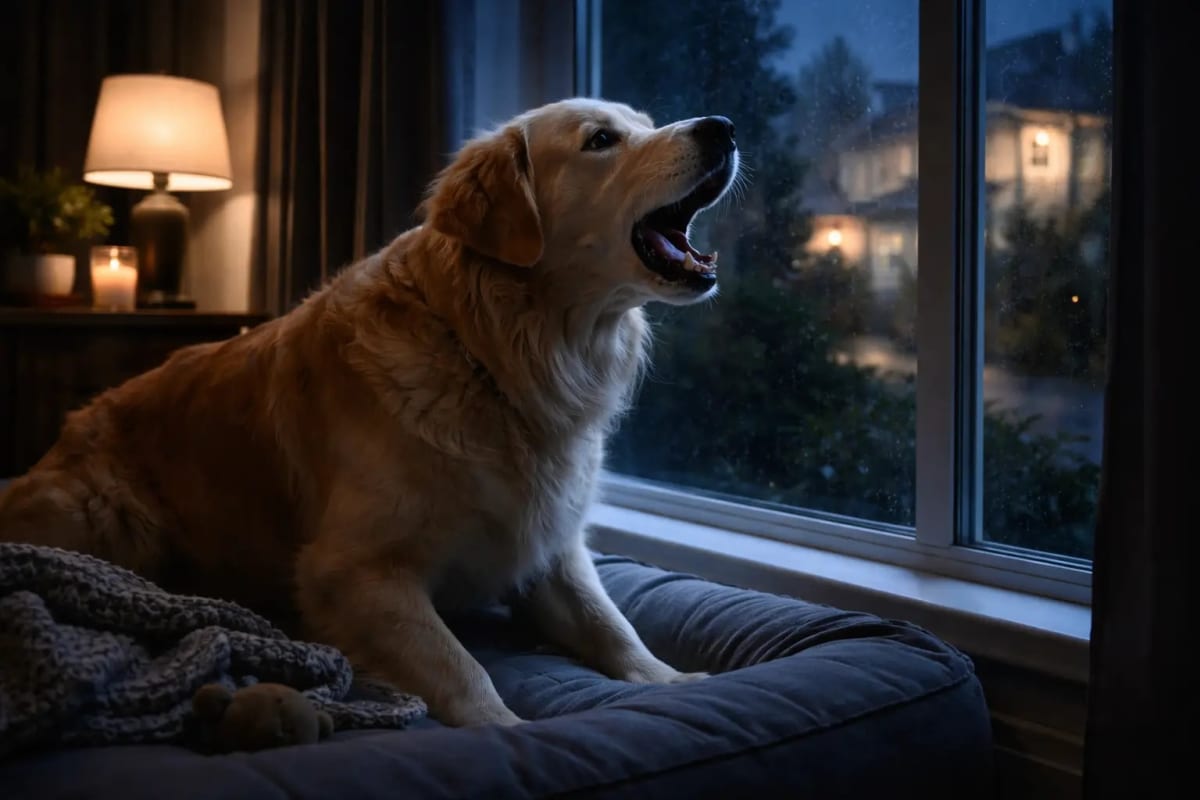
How to Stop Dog Barking at Night: 8 Vet-Backed Solutions That Actually Work
Why Dogs Bark at Night and What to Do About It
It is 2am. Your dog is barking. You have tried telling them to stop. You have tried ignoring it. You have tried pulling the pillow over your head. Nothing works, and tomorrow you have to be up at 6am.
If this sounds familiar, you are in good company. Nighttime barking is one of the most common and most frustrating behavior problems dog owners face. The exhausting part is not just the lost sleep. It is the guilt of not knowing why your dog is doing it or what you should actually do about it.
Here is the honest truth: your dog is not barking to annoy you. Dogs rarely bark without a reason. Something is triggering them, whether that is boredom, anxiety, a noise outside, or something medical. Once you understand the cause, the fix becomes much clearer. This guide walks you through the most common reasons dogs bark at night and exactly what to do about each one.
Key takeawayNight barking is usually a signal, not bad behavior for no reason. Once you identify the trigger, the solution becomes much easier.
The goal is not to silence your dog blindly. The goal is to understand what they are trying to tell you.
Night Barking CausesWhy does your dog bark at night? The 6 most common causes
Before jumping to solutions, it helps to understand what is actually driving the behavior. Dogs bark at night for several common reasons, including boredom, loneliness, heightened senses, and sometimes more serious causes like discomfort or pain. Here is a breakdown of the six most common triggers:
1Sounds and environmental triggers
EnvironmentalDogs can hear the same sound we hear from four times the distance, so through the night they will be picking up on noises you simply cannot hear — passing cars, wildlife outside, a neighbor walking home late, or even a boiler turning on. To your dog, these are real alerts that deserve a response. They are not barking at nothing. They are doing their job.
What to doTry using a white noise machine or keeping your dog in a quieter room. Drawing curtains or using blackout shades can also reduce visual triggers like passing cars or animals outside.
2Separation anxiety or loneliness
AnxietyDogs are pack animals by nature. Being alone in a dark room at night while their family sleeps elsewhere can feel genuinely distressing to some dogs, especially those with separation anxiety. Some dogs bark because they are anxious, especially if they suffer from separation anxiety when their humans go to bed or leave them alone in another room.
3 Behavioral 4 Behavioral 5 Medical 6 Medical Practical Fixes 1 2 3 4 5 6 7 8 6 to 7pm Exercise session Walk, play, or training to burn physical and mental energy 7 to 8pm Evening meal Eating too late can cause restlessness or digestive discomfort at night 8 to 9pm Wind down time Calm interaction, no exciting play, dim lights 9 to 10pm Final potty break Always the last thing before bed, no exceptions Bedtime Settle in sleeping area White noise on, curtains drawn, favorite toy or blanket available DO THIS + Stay consistent every single night + Reward silence with calm praise + Ensure all family members follow the same rules + Tire your dog out properly during the day + Rule out medical causes if barking is new or sudden NEVER DO THIS ! Yell or punish your dog for barking ! Go to them every time they bark ! Use a muzzle overnight (dangerous) ! Give up after two or three days ! Let one person follow the rules while others don’t IMPORTANT ✓ Identify the likely cause before trying any solution ✓ Rule out medical issues if barking is new, sudden, or getting worse ✓ Set up a cozy, quiet sleeping area away from noise and visual triggers ✓ Add a white noise machine to block environmental sounds ✓ Give a proper exercise session 2 to 3 hours before bed ✓ Always do a final potty break right before settling down for the night ✓ Never respond to attention-seeking barking, no matter how tempting ✓ Make sure every family member follows the exact same approach Night Barking FAQ