Dog Separation Anxiety: Causes, Signs, and 7 Vet-Approved Fixes That Actually Work
·14 min read
Dog Behavior & Anxiety Guide
Dog Separation Anxiety
You grab your keys. Your dog starts pacing. You put on your shoes. They begin to whine. You open the front door, and their whole world falls apart.
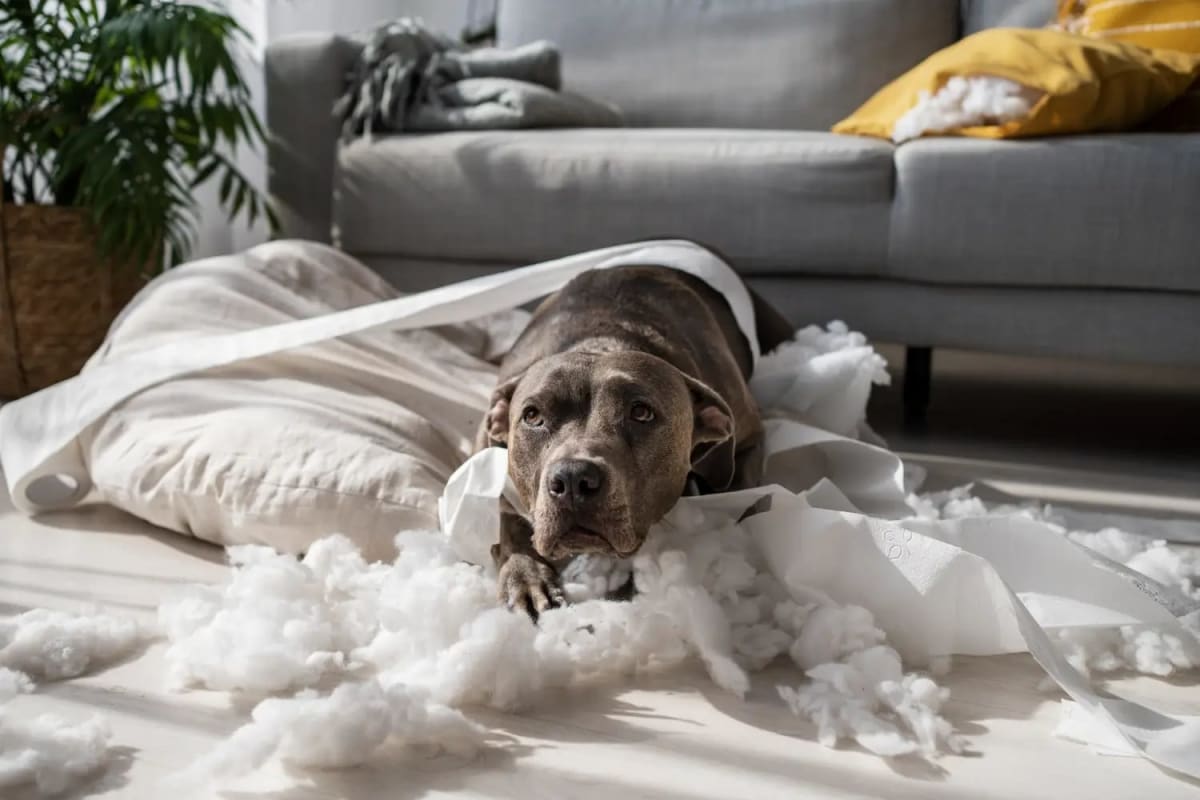
If you have ever come home to chewed furniture, a destroyed doorframe, or neighbors complaining about non-stop barking, you already know how distressing separation anxiety can be. And not just for you. Your dog is not doing this to punish you or get revenge for leaving. According to certified separation anxiety trainer Tina Flores at PetMD, a dog experiencing separation anxiety is going through something very similar to a human having a panic attack. Every time they are left alone, their bodies are flooded with the same stress hormones. It is genuine fear, not bad behavior.
The good news is that, according to the AKC, separation anxiety has a high rate of treatment success with patience, the right approach, and in some cases, veterinary support. This guide walks you through everything you need to know to actually help your dog.
Important perspective
Separation anxiety is not stubbornness or revenge. It is a fear response that deserves calm, informed treatment.
The goal is not to punish the behavior. The goal is to understand the underlying distress.
Understanding the Condition
What is separation anxiety in dogs, really?
Separation anxiety is not just a dog who gets a little sad when you leave. According to the ASPCA, it describes dogs that become extremely anxious and show distress behaviors such as vocalization, destruction, or house soiling when separated from their owners. Most dogs with separation anxiety try to remain close to their owners, follow them from room to room, and rarely spend time outdoors alone.
It is also worth knowing what separation anxiety is not. It is not the same as a dog who chews a sock out of boredom, or a puppy who whimpers once and then settles down. True separation anxiety is persistent, intense, and happens every time you leave, or almost every time. Before assuming your dog has it, it helps to understand the full picture.
Key takeaway
True separation anxiety is not occasional sadness. It is a repeated pattern of intense distress tied specifically to being left alone.
Important distinction
Some dogs that look like they have separation anxiety are actually just bored, under-exercised, or incompletely house trained. VCA Animal Hospitals notes that if your dog destroys things and eliminates both when you are home and when you are away, it is likely not separation anxiety. True separation anxiety behaviors happen specifically during your absence, not randomly throughout the day.
Symptoms & Severity
Mild separation anxiety
Severe separation anxiety
Causes & Triggers
1
2
3
4
5
6
Treatment & Training
1
1
2
3
4
Pro Tip
Avoid using a crate if your dog panics when confined. Many dogs with separation anxiety do worse in tight spaces and may injure themselves trying to escape. If your dog has never been crate trained or shows distress inside one, a crate is not the right safe space for them. Choose a larger room instead and work on positive crate introduction gradually and separately.
5
Pheromone therapy
Anxiety wrap
Natural supplement
Daily supplement
Do this
Never do this
Pet Wellness FAQ
Is your dog barking at night and ruining your sleep? This vet-backed guide covers 8 proven solutions, the most common causes of nighttime barking, and exactly when to call your vet.
The right treatment starts with the right diagnosis.
Signs your dog has separation anxiety
The clearest sign is that the behavior happens when you leave and stops when you return. Here are the most common symptoms to watch for:
Excessive barking or howling
Starts shortly after departure, persists the whole time you are gone
Destructive chewing
Usually focused on doors, windows, or owner possessions
House soiling
Accidents from a previously house-trained dog when left alone
Pacing or circling
Repetitive walking patterns, particularly near exits
Escape attempts
Digging or chewing through doors, windows, or fences
Pre-departure anxiety
Whining, panting, or shadowing you as soon as you pick up your keys
Excessive excitement on return
Frantic greeting that goes well beyond normal happiness
Refusing to eat when alone
Will not touch food or treats left out during your absence
Settles within 30 minutes of departure
Occasional accidents or minor chewing
Responds well to training alone
Eats treats left during absence
Distress lasts the entire absence
Self-injury from escape attempts
Anxiety begins before you even leave
Refuses all food when alone
The pattern matters most: what happens when you leave, how intense it becomes, and whether your dog can settle without you.
What causes separation anxiety in dogs?
Understanding why your dog developed separation anxiety in the first place helps you choose the right treatment approach. found that several risk factors make dogs more likely to develop separation-related behavior problems. Here are the most common causes:
A major change in routine or environment
According to Vet, changes in the home or people's schedules are among the most common triggers. Moving to a new home, a family member leaving, returning to work after a long period at home, or even a change in your daily schedule can destabilize a dog who had previously been fine alone. Dogs are deeply routine-based creatures, and disruption to what they know as normal can tip them into genuine anxiety.
Rehoming or shelter history
The PMC research found that dogs sourced from shelters or found as strays are significantly more likely to develop separation anxiety. Dogs who have experienced abandonment, multiple rehomings, or loss of a previous owner carry a heightened fear that the people they bond with will simply disappear again. This is not a character flaw. It is a completely understandable emotional response to a genuinely difficult history.
Being separated from the litter too early
The same PMC research found that puppies separated from their litter before 60 days of age were at higher risk of developing separation-related behavior problems later in life. The early weeks with their mother and siblings teach puppies crucial emotional regulation skills. Removing them before this learning is complete can leave lasting gaps in how they handle stress and solitude.
Lack of alone time as a puppy
VCA Animal Hospitals recommends that puppies should have scheduled times where they learn to spend time alone in their own crates or beds. Puppies that are always with their owners and never taught to self-soothe miss a critical developmental window. When they eventually face real alone time as adults, they have no coping tools to fall back on.
A traumatic experience while alone
A dog that experienced something frightening while alone, such as a thunderstorm, fireworks, a break-in, or an injury, can develop a learned fear of solitude. They associate being alone with danger and their anxiety kicks in as a protective response every time they find themselves without you. This kind of anxiety often develops quite suddenly, which can be confusing for owners whose dogs were previously fine.
Genetic predisposition
Veterinary Clinic notes that some dogs have a genetic predisposition to anxiety, meaning it is simply part of their wiring from birth. Certain breeds, particularly those bred to work closely with humans like Border Collies, German Shepherds, and Vizslas, are statistically more likely to develop separation-related issues. In these cases, prevention and early management matter even more.
The cause matters because the right treatment depends on why the anxiety started in the first place.
7 vet-approved fixes for separation anxiety
Treatment almost always requires a combination of approaches. Chewy's vet panel confirms that dogs with separation anxiety respond best to multimodal treatment, meaning a combination of different tactics rather than one single solution. Here is what works:
Gradual desensitization to your departure
This is the most evidence-backed approach and the foundation of almost every successful treatment plan. The core idea is simple: gradually accustom your dog to being alone by starting with very short separations that do not produce anxiety, then slowly increasing the duration over many weeks.
Start with micro-departures (under 1 minute)
Put on your shoes, pick up your keys, walk out the door, and come straight back in. Repeat until your dog shows no anxiety at all during this sequence.
Extend very slowly (5 minutes, then 10, then 20)
Each session should end before your dog reaches their anxiety threshold. If they start showing stress, you have gone too long. Back up to a shorter duration.
Keep departures and arrivals completely calm
No dramatic goodbyes, no excited greetings. Staying low-key signals to your dog that leaving and returning are normal, not events worth panicking about.
Progress based on your dog's reaction, not a calendar
Some dogs move through this in weeks. Others take months. Rushing the process backfires and can make dogs more sensitive, not less.
Set up a camera or leave your phone recording before you leave so you can watch how your dog actually behaves during your absence. Many owners are surprised to discover their dog settles within 10 minutes, or conversely, that the anxiety is far more severe than they realized. Real video footage is also incredibly useful information to share with your vet or behaviorist.
2. Build a genuine safe space for your dog
Every dog with anxiety needs a dedicated safe zone, a place that feels genuinely secure and calming when you are gone. This could be a crate if your dog already has a positive association with it, a specific room, or a comfortable corner with their bed and a worn piece of your clothing nearby. The key is that this space should be introduced positively and built up over time, never forced.
Important
3. Teach independence while you are still home
Vet recommends teaching independence by encouraging your dog to settle in a different room while you are still at home. Start small. Ask your dog to stay on their bed while you move to the next room, then reward calm, relaxed behavior. Over time this builds the confidence and self-soothing ability that anxious dogs genuinely lack. Teaching your dog that physical distance from you is safe and normal, even when you are present, makes the real separation far less frightening.
4. Exercise and mental stimulation before departures
A tired dog is a calmer dog. Regular walks and playtime before departures can significantly ease restlessness. Aim for a meaningful exercise session 1 to 2 hours before you leave, giving your dog time to wind down afterward. Mental stimulation matters just as much as physical exercise. A 10-minute training session or a sniff walk can tire a dog's brain more effectively than a 30-minute jog. The goal is a dog who genuinely wants to rest when you leave.
Use calming aids to support the training process
Calming aids do not cure separation anxiety on their own, but they can take enough of the edge off to make training more effective. The most commonly recommended options include:
Adaptil diffuser
Releases synthetic calming pheromones that mimic those produced by nursing mother dogs
ThunderShirt
Applies gentle, constant pressure that many anxious dogs find deeply soothing
L-theanine supplements
Promotes relaxation without sedation. Small research studies support mild to moderate anxiety use
Calming Care probiotic
Purina's daily probiotic shown to promote calm behavior over time with regular use
6. Consider medication for moderate to severe cases
For dogs whose anxiety is severe enough to prevent any training from taking hold, medication can be a genuinely important part of the solution. Medication is used alongside training in all cases by decreasing overall anxiety, enabling training to be more successful. It is never a standalone fix, but it can make the difference between a dog who can engage with training and one who cannot.
Two FDA-approved medications exist specifically for canine separation anxiety. Reconcile (fluoxetine) is a long-term SSRI medication, and Clomicalm (clomipramine) is a tricyclic antidepressant. Short-acting options like trazodone or gabapentin can also be used situationally before planned absences. Always consult your vet before starting any medication.
7. Work with a certified behaviorist for severe cases
When home training is not making progress, or when anxiety is severe enough to cause self-injury, bringing in a professional is not a last resort. It is the smart move. Look for a Certified Applied Animal Behaviorist (CAAB) or a Certified Separation Anxiety Trainer (CSAT). These professionals can design a personalized desensitization program, interpret your dog's responses accurately, and adjust the plan in real time. The ASPCA specifically recommends that desensitization and counterconditioning for serious separation anxiety require the guidance of a trained professional because fear must be carefully avoided, or the process can backfire entirely.
The most successful treatment plans combine patience, structure, and consistency over time.
What to do and what to avoid
Film your dog during absences to understand the real severity
Build alone time gradually while still at home first
Keep all departures and arrivals low-key and calm
Exercise your dog meaningfully before leaving
Talk to your vet early rather than waiting it out
Punish destructive behavior caused by anxiety
Force a panicking dog into a crate
Give overly emotional goodbyes or excited reunions
Rush through desensitization steps
Assume getting another dog will automatically fix it
Quick checklist to start helping your dog this week
✓
Book a vet visit to rule out any medical causes first
✓
Set up a camera to record your dog during your absence and understand the real severity
✓
Begin practicing micro-departures of under one minute with zero drama
✓
Set up a dedicated safe space with familiar bedding and your scent
✓
Start building independence at home by rewarding calm behavior in a separate room
✓
Consider a pheromone diffuser or calming supplement as a training support
✓
Ask your vet about medication if training alone is not making progress
Frequently asked questions
Can dog separation anxiety be cured completely?
+
Separation anxiety is often a chronic condition that requires ongoing management rather than a one-time cure. That said, the AKC notes it has a high rate of treatment success, meaning most dogs improve significantly with the right approach. Many dogs reach a point where they are genuinely comfortable alone, even if they needed substantial support to get there. The earlier you start treatment, the better the outcome tends to be.
Will getting a second dog help my dog's separation anxiety?
+
Not reliably. Some dogs do better with a companion, but the research is mixed. Dogs with true separation anxiety are specifically attached to their human, not just afraid of being alone in general. A second dog may distract them or provide some comfort, but it often does not address the root cause. Focus on behavioral training first, and consider a second dog only if it genuinely fits your lifestyle rather than as a fix for anxiety.
How long does it take to treat separation anxiety in dogs?
+
It depends entirely on the severity and the dog. Mild cases often improve within a few weeks of consistent desensitization training. Moderate to severe cases can take several months, especially if medication is needed to get anxiety levels low enough for training to be effective. The most important thing is to progress at your dog's pace rather than pushing forward on a fixed timeline.
Is it okay to leave a puzzle toy or food for a dog with separation anxiety?
+
It depends on the severity. For mild anxiety, enrichment toys can be genuinely helpful. However, PetMD's certified separation anxiety trainer cautions that for dogs with full-blown separation anxiety, food toys can backfire. If a dog has learned that receiving a treat means you are about to leave, the food itself becomes a departure cue that triggers panic. Use enrichment thoughtfully and watch your dog's response before relying on it as a main calming strategy.
My dog only has separation anxiety on workdays. Is that normal?
+
Yes, and it is actually well documented. Some dogs learn to distinguish between workdays and days off based on routine cues like alarm times, clothing choices, or changes in household activity. There are even dogs who can tell the difference between workdays and days off and are only anxious on workdays. This is not a coincidence but a sign of how attuned dogs are to routine. Varying your departure cues, such as picking up your keys without leaving, or leaving briefly on weekends, can help desensitize your dog to the specific triggers they have learned to associate with your long absences.
Helpful answers are important. Calm, consistent action is what creates progress.